Tree Removal Near Power Lines Cost in Chicago
Tree removal near power lines in Chicago costs $1,000 to $5,000+. Learn how utility coordination works, the safety rules, and what drives the price.
Quick answer: Removing a tree near power lines in Chicago typically costs $1,000 to $5,000 or more, because the work requires utility coordination, extra safety measures and often a crane.
Trees near power lines are a special case. The work is slower, more regulated and more dangerous, and part of the process may involve your utility company rather than the tree service.
This guide explains how tree removal near power lines works in Chicago, what it costs, and the safety rules you should never break.
Tree Removal Near Power Lines Prices in Chicago
The premium reflects coordination, line clearance and the extreme care required.
| Situation | Complexity | Typical range |
|---|---|---|
| Limb near a line | Moderate | $400 - $900 |
| Tree touching a line | High | $1,000 - $2,500 |
| Large tree over lines | Very high | $2,500 - $5,000 |
| Line clearance by utility | Utility-owned | Often free / coordinated |
What Affects the Price
- Utility coordination - the utility may need to de-energize or clear lines first.
- Line clearance requirements - crews maintain safe clearance distances at all times.
- Equipment - cranes and insulated tools add cost.
- Tree size and lean - a leaning tree over lines is among the hardest jobs.
- Access - streets and traffic may need management.
How to Handle Power Line Tree Work Safely
- Call the utility first if a limb is on or near a line.
- Never attempt any work near a line yourself.
- Plan removals before trees grow into the lines.
- Ask whether the utility will handle line-clearance work for free.
Safety Rules You Should Never Break
Never touch a tree that is in contact with a power line, and never raise a ladder or pole near one. Keep a safe distance, call 911 and the utility, and wait for professionals. Electricity can travel through a tree, especially when it is wet.
Who Is Responsible for the Tree?
In many cases the utility is responsible for clearing branches around its lines, while the property owner is responsible for the tree itself. Our team coordinates with the utility so the work is done safely and legally, then handles the removal and cleanup.
How Power Line Tree Work Is Coordinated
- Safety assessment. We identify line contact and required clearances.
- Utility coordination. The utility may de-energize lines or clear a path first.
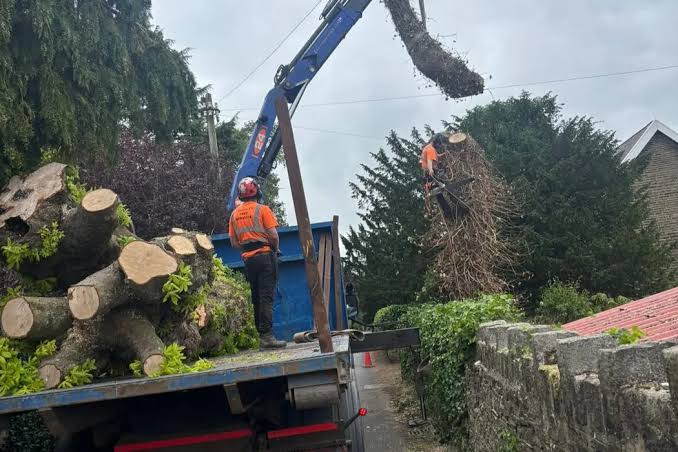
- Controlled removal. Crews remove the tree using insulated tools and, when needed, a crane.
- Cleanup. Debris is removed and the site is made safe.
Power Line Tree Warning Signs
- Branches touching or resting on a line.
- A tree leaning toward overhead wires.
- Branches within a few feet of a line.
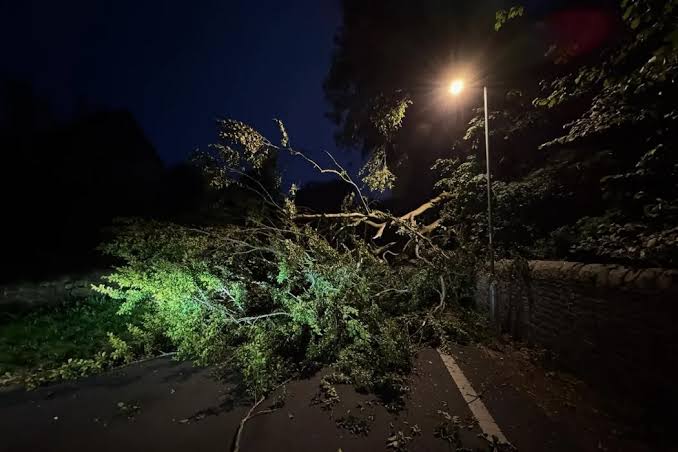
- Storm damage that pushed a limb into a wire.
- Sparks, buzzing or scorched leaves near a line.
Power Line Tree FAQs
Who is responsible for trees near power lines?
Utilities typically clear branches around their lines, while the property owner is responsible for the tree itself.
Is utility line clearance free?
Line-clearance work done by the utility is often free, but removing the tree itself is usually the owner's cost.
What if a tree is touching a live wire?
Do not touch it or anything near it. Call 911 and the utility immediately and keep everyone at a safe distance.
About A-1 Tree Services
A-1 Tree Services has cared for Chicago trees since 1998. Founded by Sahip Zengilani, our licensed and insured team includes certified arborists and handles tree removal, trimming, pruning, stump grinding and 24/7 emergency work for homes and businesses across the city. Every tree removal near power lines job starts with a free, written estimate and ends with a clean property. Call (312) 815-3897 to schedule yours.
From Logan Square to Hyde Park, our crews work around tight lots, mature canopies and utility lines every day. We use the right rigging, cranes and safety equipment for each site, which keeps the work efficient and safe, and we document everything for homeowners and property managers alike.
The Bottom Line
Tree removal near power lines in Chicago costs $1,000 to $5,000+, with utility coordination required. Call (312) 815-3897 and we will manage the process safely.
Need Tree Care in Chicago?
A-1 Tree Services is licensed, insured and backed by 30+ years of Chicago experience. Get a free estimate today.